
The Newtonian Stage: Space as a Container
For over two centuries, the foundation of classical mechanics rested on a single, intuitive assumption about the nature of space: it was an absolute, rigid container. In Isaac Newton’s framework, space was the static, empty stage upon which the actors – mass and energy – performed. Under Newtonian rules, distance is a fixed, objective metric described by three-dimensional Euclidean geometry. The distance (d) between any two points in this absolute space is governed by the unchanging Pythagorean metric:
If you removed all matter from the universe, this infinite grid of coordinates would remain perfectly intact. Space had no properties of its own; it was merely the geometric void that prevented everything from happening in the exact same place.
The Einstein Fabric: Space as a Medium
Albert Einstein shattered this absolute stage. He recognized that if the speed of light () is a universal constant for all observers, then space and time themselves must be malleable to accommodate it.
In General Relativity, the fixed Euclidean grid is replaced by a dynamic, four-dimensional metric tensor, . Space is a physical medium – spacetime – and its geometry is actively warped by mass and energy. This relationship is formalized in the Einstein Field Equations:

Here, the Einstein tensor represents the curvature of the spacetime geometry, while the stress-energy tensor
represents the distribution of mass and energy. As physicist John Archibald Wheeler famously summarized: “Space tells matter how to move, and matter tells space how to curve.”
The Quantum Collision: The Measurement Problem
General Relativity is a flawless map for the macroscopic universe, but it contains the seeds of its own limitation. When physics shifts to the infinitesimal scale of subatomic particles, the continuous, deterministic fabric of spacetime breaks down entirely.
Quantum Mechanics rejects the relativistic premise of an objective reality. In the quantum realm, a particle’s exact location and momentum cannot be simultaneously known, a fundamental limit defined by Heisenberg’s Uncertainty Principle:

Instead of occupying a precise coordinate, a particle exists as a wave function () representing a superposition of probabilities. It does not possess a definite location until an interaction – a measurement – forces that wave function to collapse.
General Relativity demands a universe that exists and curves independently of observation. Quantum Mechanics demands a universe shaped entirely by interaction and measurement. At the extremes of the cosmos, these two incompatible mathematical models violently collide.
The Relational Universe: Emergent Spacetime
To resolve this crisis, modern theoretical physics abandons the idea of space as a continuous fabric entirely, replacing it with a purely relational framework based on quantum interactions.
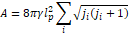
Pioneered by physicists like Carlo Rovelli and Lee Smolin, Loop Quantum Gravity (LQG) posits that space is a “spin network” – a mathematical graph of discrete, quantized nodes. Space is not the background; space is the network of connections. Geometry itself is quantized, with physical area coming in discrete packets scaled by the Planck length ():
Similarly, the ER=EPR conjecture, advanced by Leonard Susskind and Juan Maldacena, suggests that spacetime is an emergent property generated by quantum entanglement. If two particles share an entangled state, they are physically adjacent in the fundamental architecture of the universe, regardless of their apparent macroscopic distance.
In these bleeding-edge frameworks, space is the universe’s relational ledger. “Distance” is not an amount of emptiness between two coordinates; it is an inverse measure of entanglement entropy (). Highly entangled, interacting nodes are mathematically “close.” Nodes with zero quantum correlation have an effective distance approaching infinity:
Space is simply the sum total of all causal transactions.
The Topography of Revelation
Applying this precise physics framework of relational topology offers a resolution to the following.
When the Torah provides us with a description of Moshe’s accomplishments, including the identification of his burial by G-d as being an unparalleled kindness extended by G-d, the Torah also states[i] where Moshe was buried: ויקבר אתו בגי בארץ מואב מול בית פעור, ולא ידע איש את קברתו עד היום הזה – and he [G-d] buried him [Moshe] in the valley, in the land of Moav, opposite בית פעור. And no person knows his burial [place] until today.
Read through a classical, Newtonian lens (), this is a taunting contradiction. If the exact
coordinates are provided – בגי בארץ מואב מול בית פעור, an observer’s location (
) can simply be advanced until it equals Moses’ location (
).
- If the purpose of the inability to locate the grave is so that Moshe won’t be disturbed[1], why does the Torah provide us with the location where Moshe was buried.
Furthermore, this verse is also inserted as a prelude to the verses listing out Moshe’s accomplishments and character, if this is something being done FOR him, by G-d, why is it included in these verses. To adequately explain why the grave cannot be found, one presumably must assume that arbitrary miracles are being performed – invisibility or striking searchers with blindness – none of which serve to establish the greatness of Moshe’s character.
However, we cannot even say that there were these miracles being performed. In discussing this verse, the Gemara[ii] notes an actual occurrence in which soldiers were dispatched to located Moshe’s grave. But upon arrival: “They went and stood above, and it appeared to them to be below. They went below, and it appeared to them to be above.”
The grave is not invisible; rather, its physical location actively shifts relative to the observer’s frame of reference.
The Kabbalistic Coordinate System
In Sefer Yetzirah and subsequent Kabbalistic thought, physical space does not just exist as an empty void; it is actively generated by a specific divine geometry.
The six (6) Sefiros of זעיר אנפין – חסד, גבורה, תפארת, נצח, הוד, יסוד – correspond to the six (6) perpendicular axes (or Ordinates) of three-dimensional space: Up, Down, Right, Left, Forward and Backward. When you connect these six extremities, you generate the twelve (12)גבולי אלכסון (the diagonal boundaries where each axis meets with another; e.g. forward and right = southeast).
These twelve (12) boundaries form the edges of a hyper-cube. They are the absolute geometric confines of reality in the lower worlds (בריאה, יצירה ועשיה).
- The Physics Translation: The twelve (12) גבולי אלכסון are the exact equivalent of the Newtonian
coordinate grid (
). They create the rigid container, the “box” within which all physical transactions in the lower worlds must occur.
The Dimensional Divide
The lower worlds—starting with בריאה (Creation)—are where separation, distance, and measurable space begin to take root. Entities inside בריאה are bound by the geometric laws of the twelve (12) boundaries.
The dimension / world of אצילות though is fundamentally different. In the world of אצילות, the אורות – lights and even the vessels of the Sefiros, the כלים are fundamentally infinite. As we learn איהו וחייוהי חד, איהו וגרמוהי חד. It is a world of pure, unified divinity.
- In אצילות, there is no separation. There is no “distance” because there is no geometric grid[2].
The Physics Translation: אצילות operates entirely like the entangled quantum state in the ER=EPR model (). It is a pure relational network without a superimposed spatial grid. Everything is perfectly entangled.
The Philology of Infinite Distance
This explains why the Roman soldiers were unable to arrive at the location of Moshe’s gravesite. Moshe, having achieved a state of existence utterly detached from standard human reality – an איש האלקים, represents a node on the universe’s network with zero relational connectivity () to the nodes occupied by ordinary humans. He is physically associated with the world of אצילות.
On the other hand, the Roman soldiers existed entirely within the physical framework of the lower worlds. Their reality was strictly governed by the twelve גבולי אלכסון. When they marched to “בית פעור,” they were moving along the coordinate grid generated in the worlds of בריאה and lower. They had no relationship to anything outside their geometric box.
Because there is no possible interaction or entanglement between their realities, the relational distance calculation is absolute:
The soldiers could stand at the exact geographic coordinates of בית פעור, such that ,
, and
. But because space is not a physical container, occupying the same coordinate does not mean they occupy the same relational space.
This relational topology is cemented by the etymology of the Hebrew word used in the verse: ידע – to know intimately.[3] In Biblical philology, ידע does not denote the mere intellectual acquisition of data or GPS coordinates. It signifies an intimate, experiential transaction – a profound relational connection.
The Torah is not mocking the reader by withholding a location. It provides the exact spatial coordinates specifically to establish a fundamental law of spiritual and relational physics: no human has since been able to achieve a direct relationship with the world of אצילות since, in the same way that Moshe did. That specific node of reality is in a different dimension. Even when standing on the exact physical coordinate, the unbridgeable lack of entanglement renders the grave infinitely distant.
[1] The Midrash, in explaining Yaakov’s request to be buried in Israel, offers a similar concern that Yaakov had – he worried that the Egyptians would worship him. It is not a leap of logic to assume that Moshe or G-d could have had the same concern with regards to the Moabites in the area.
[2] Ĉassidus calls this a סדר זמנים instead of being subject to actual time. This is not the place to expand on that topic.
[3] As in the verse והאדם ידע את חוה אשתו.
[i] Devarim 34:6
[ii] Gem. Sota 14a